Nashville Airport installs reasonably priced EV Charging including a Rapid Charger

76900

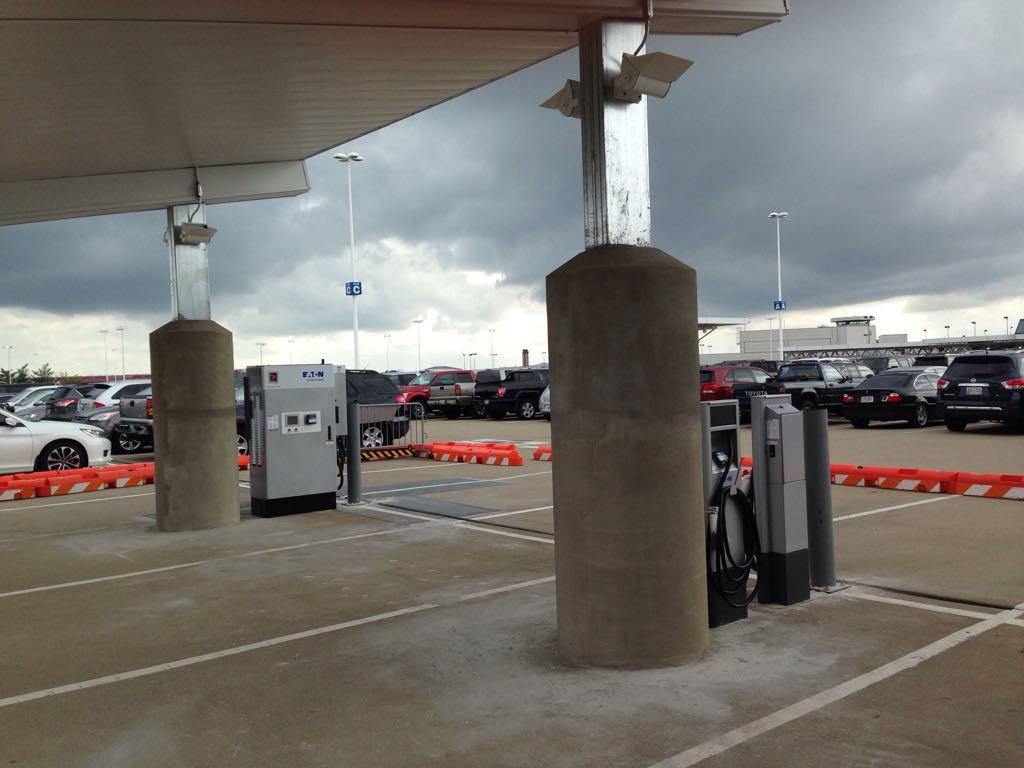
Two Level 2 charge units and one DC Fast Charge unit at Nashville AIrport Short Term Car Park

The Nashville International Airport (BNA) is installing several EV charging stations in their short term parking lot. They are housed underneath a solar canopy on the top deck. Two 240v Level 2 charging stations and one Eaton CHAdeMO DC Fast Charge unit will be operational soon.

The cost is very reasonable. $2 per charge session starting in June 2015, until then they are free to use once the installation is completed.

One very refreshing feature of these units is the inclusion of a credit card reader for activation. No ‘charging network cards’ are required to activate the units. I wish more charging stations followed the standard credit card model utilized at gas stations. I have no problem with an additional loyalty card(s) to get a discount or other benefits.


The first 20 minutes of short term parking is free at the airport. So it is conceivable one could rapid charge for $2 and not incur a parking fee!!

Well done Nashville Airport, you have a done a great job all round with this installation. It promises to be the best EV charging location in the Nashville area.

76902

Fast Charge Unit at Nashville Airport (BNA)


Posted in CHAdeMO, Electric Car, Level 2 EV Charger, Level 3 EV Charger | Tagged , , | Leave a comment

Cheeky Tesla Driver prompts Newton Nissan to padlock their DC Quick Charge Unit

Padlock on Rapid Charge unit at Newton Nissan

Padlock on Rapid Charge unit at Newton Nissan

Update: 2015-05-23. DC Fast Charger no longer padlocked.

I visited Newton Nissan for a quick charge and was glad the parking space was open on a busy Saturday afternoon. I was greeted however with a padlock on the quick charge unit.

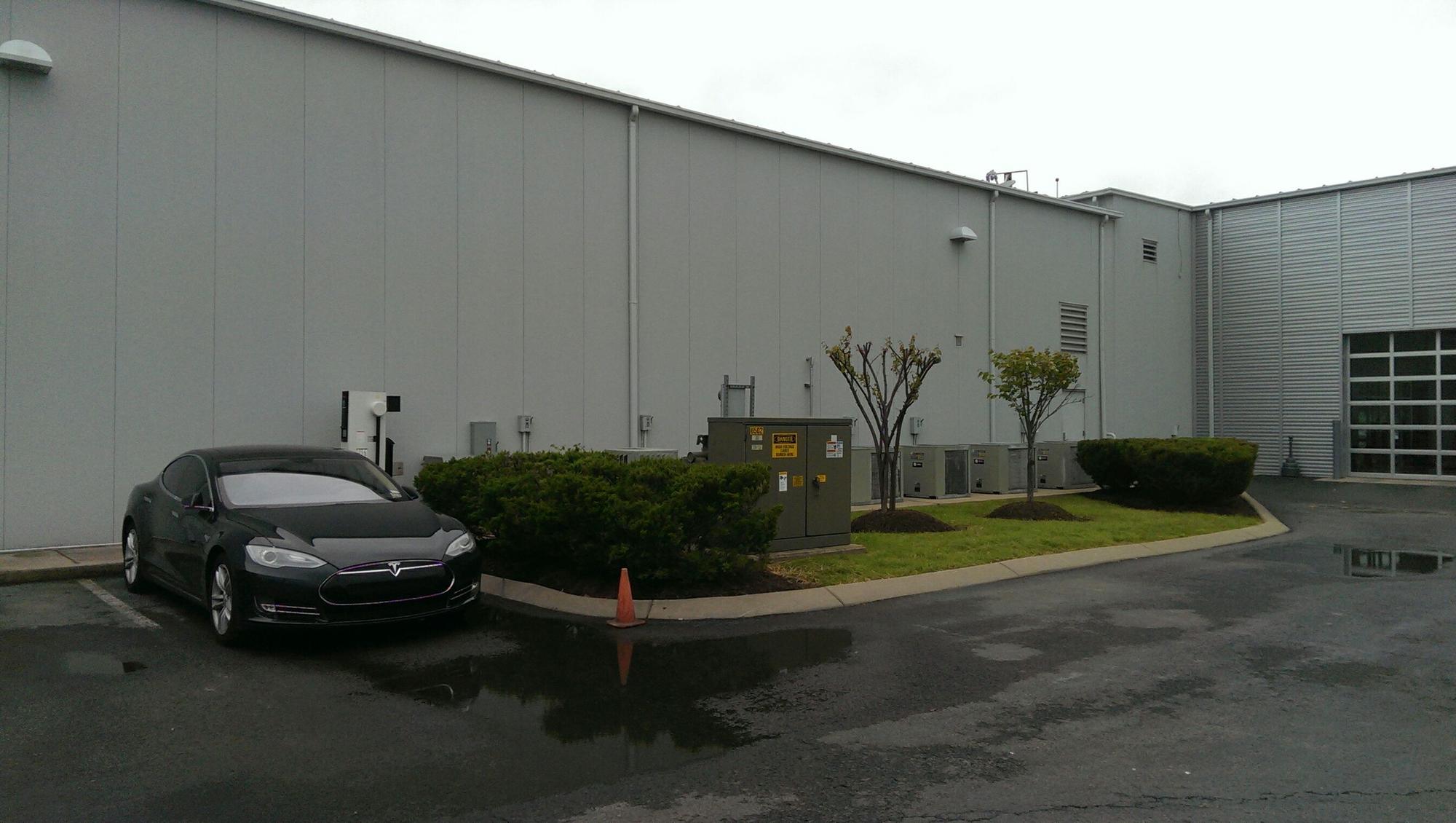
I enquired inside the service department and they unlocked the quick charge unit for me to use. The padlock is a new addition due to the fact a Tesla driver recently charged his vehicle without asking. They asked him to leave which he did, but found him using the quick charge unit again 2 hours later. Cheeky cheeky cheeky!! The EV charging wars have begun!

It’s a shame a driver had to overstep the mark. Now all drivers maybe inconvenienced, especially out of hours.

I checked on Plugshare and the Tesla Driver is someone called Chris. Ironically he thanked Newton for the rapid charge and being open out of hours. There maybe two sides to this story….

I suggested to several of the dealership staff they should not look upon this as a problem, but an opportunity. I suggested if a Tesla driver wants to charge his vehicle, let him do so, so long as he/she agrees to the test drive of a vehicle while they wait for their car to charge. Maybe his wife or kids might like to buy a Nissan LEAF or another Nissan vehicle. If they decline the test drive, decline the rapid charge. Shutting out owners of competitive EV’s may not be the best approach. Tesla owners have money, they may be willing to buy from Nissan as well, running them off will guarantee no sale now or in the future. By padlocking the unit Newton Nissan have won the battle against the cheeky Tesla driver, but they may lose the war on sales if they don’t choose to negotiate rather than stonewall.

If you expect to need to charge your LEAF out of hours, call by the dealership in advance and get the combination from them.

Tesla Charging at Newton Nissan

Tesla Charging at Newton Nissan

Update: 2015-05-14

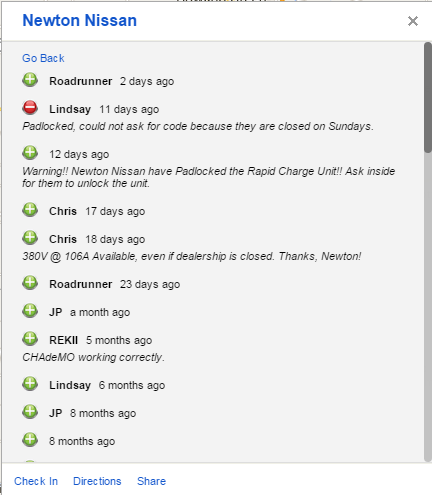
Within a few days of the padlock being installed, a Nissan LEAF owner called Lindsay has already been inconvenienced by the presence of the padlock out of regular hours (see Plugshare comments in image below). I have exchanged messages with Lindsay in the past on Plugshare and she is a long time LEAF owner and utilizes the public charging stations frequently. It’s too bad that the padlock intended to prevent ‘unauthorized’ access actually inconveniences genuine Nissan customers. I believe they should rethink this policy.

Lindsay leaves comment on Plugshare regarding padlock

Lindsay leaves comment on Plugshare regarding padlock

If you read the blog comments at the end of this article you will also discover that Chris the Tesla driver says he did ask ahead of time if it would be OK to use the DC Fast Charging station. More and more it looks like Newton Nissan have handled this issue poorly and in a heavy handed manner.

Posted in CHAdeMO, Level 3 EV Charger, Nissan LEAF | Tagged , , , | 12 Comments

Overcoming Common Error on Nissan Quick Charge Units

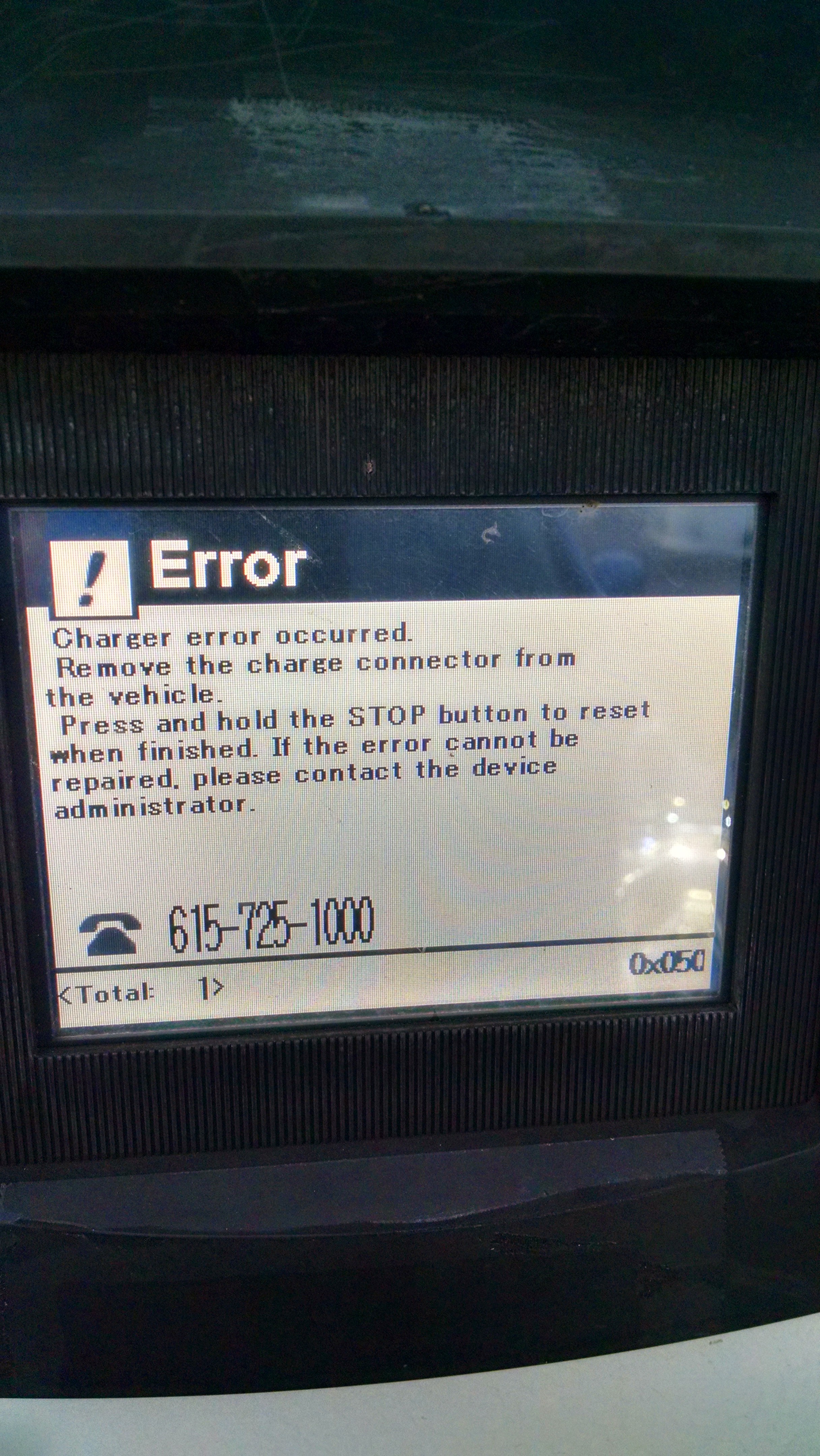
DC Fast Charge Error Message. Click to enlarge

DC Fast Charge Error Message 0x050 – Click to enlarge

That Sinking Feeling

There is a sinking feeling as you approach a quick charge station with just a few miles of range left only to see a red fault light and error message on the units display panel. Great! Now what? You think.

One of the most common errors experienced on the Nissan Quick Charge units is a communication error between the charging station and the car. This is frequently due to a badly inserted plug in the cars DC Fast charge socket. With colder weather the cable can get very stiff and result in misalignment. Drivers may get frustrated when they see this and drive off. Two of the three units at Nissan HQ had this error condition this morning, both were fixed easily. Here’s how.

Reset the DC Fast Charge Unit

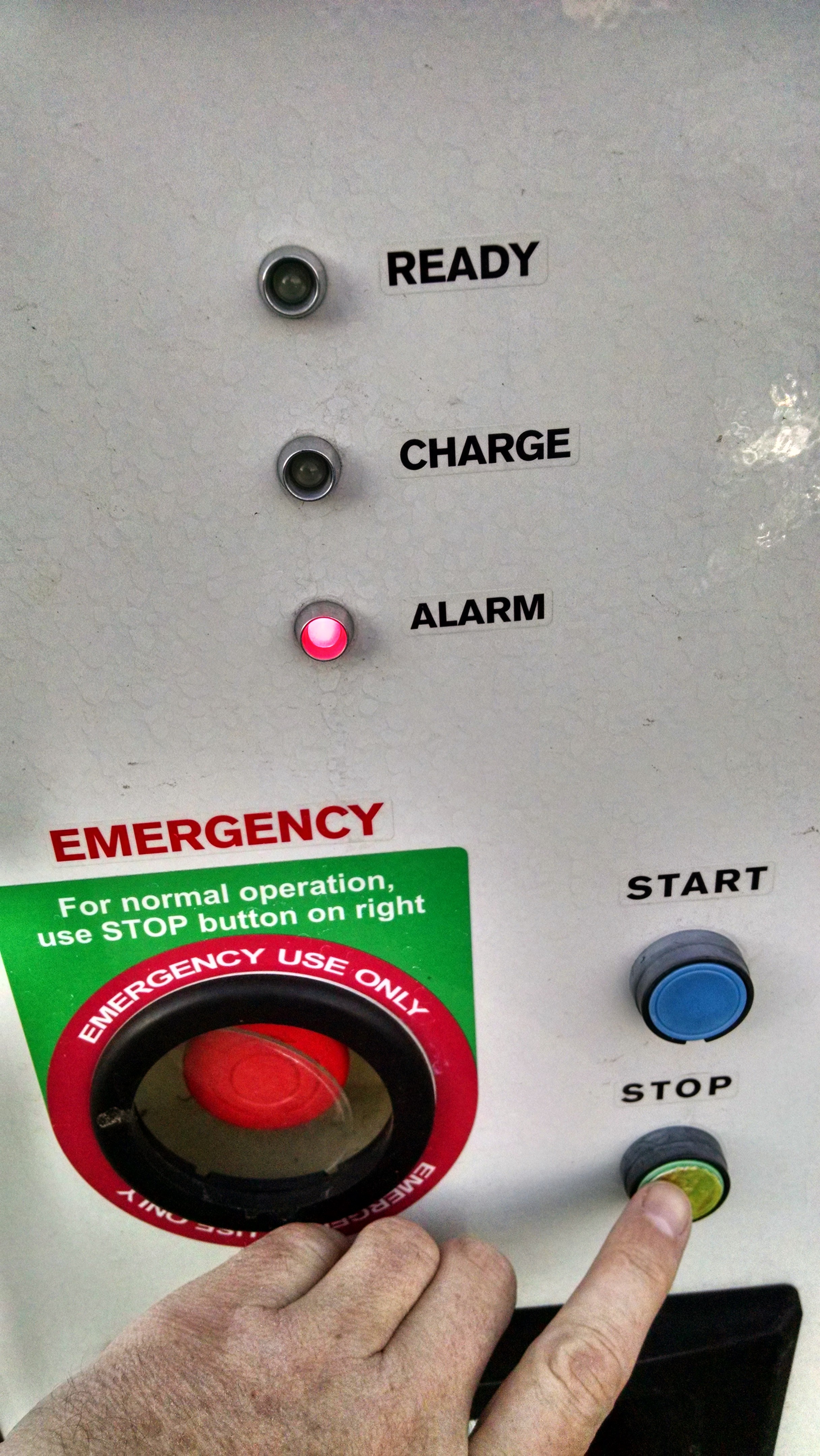
Press and hold the small green stop button

Press and hold the small green stop button for 3-4 seconds – click to enlarge.

Close examination of the error message actually reveals the action necessary to fix the error. Unplug the car, press and hold the small green STOP button for 3-4 seconds which does a soft reset of the charging station. DO NOT press the large red emergency stop button which will render the unit inoperative until reset at the breaker panel.

Unit displays diagnostic information during reset. Click to enlarge.

Unit displays diagnostic information during reset. Click to enlarge.

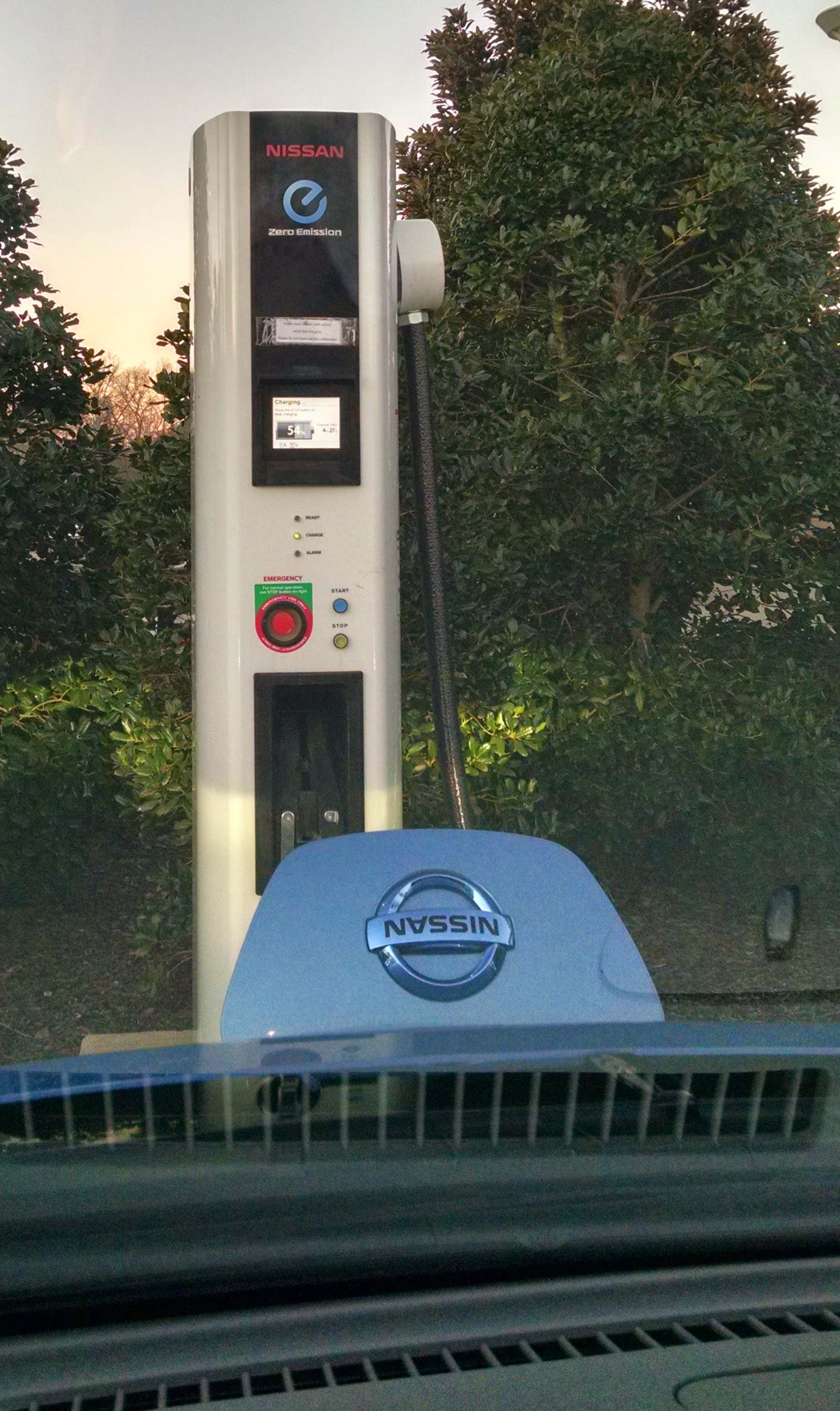
You can then plug in the car and start the charge process. Just be sure the plug is well aligned and goes all the way in. If the cable is stiff due to cold, you may have to re-position the extra cable slack to help with successful alignment. Press the blue start button and you should see and hear the plug ‘lock’ into position and the charging unit. There is  small red indicator on top of the plug which illuminates when the plug is locked into position.

Charge On

Charging successfully!!

Charging successfully!!

This simple procedure will resolve this common error on Nissan DC Fast charge units. It takes all of 5 seconds to accomplish! If the unit continues to fault and you are sure the cable is well inserted into the cars CHAdeMO socket, then call the number displayed on the unit you are located at. Please don’t just drive off without reporting errors that cannot be resolved, the site administrator depends upon field reports to know when the unit needs attention.

Posted in CHAdeMO, Electric Car, Level 3 EV Charger, Nissan LEAF | Tagged , , , , , , | 3 Comments

60,000 Miles and Counting….

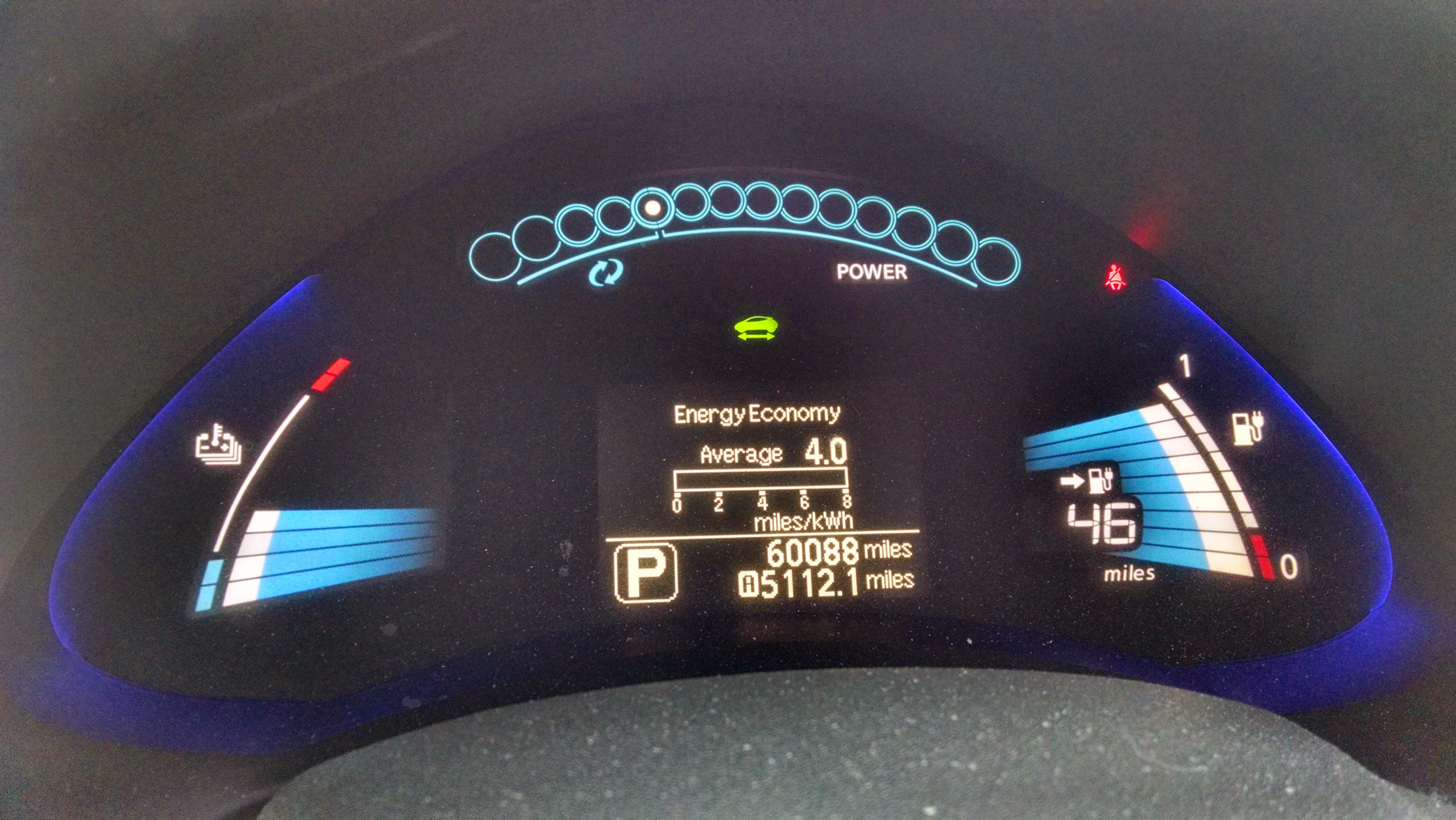
60,000 All Electric Miles - Click to Enlarge

60,000 All Electric Miles

I surpassed the 60,000 mile mark in the LEAF this week. I have had the vehicle for 3 1/2 years so I have averaged about 17,000 miles per year.

Electric Car Drivers drive 50% further than Gas car drivers.

I drive more than the average gas car driver which is 13,476 miles per year despite the LEAF’s “Limited Range”. My commute has doubled since I first got the LEAF so my current annual mileage is 20,000 miles/yr which is 50% further than the national average. (Last January I had 40,000 miles on the clock).

A recent web post by CleanTechnica reported that in Europe LEAF drivers drive about 50% further than the average gas car driver. So the pattern of driving 50% further is true across the pond as it is here in the USA.

At first this may seem counter-intuitive that a car with a range of less than 100 miles is driven 50% further each year when compared to a gas car which can get between 300 and 600 miles range per fillup *and* as gas car drivers like to remind EV drivers constantly, can be refueled in 5 minutes versus hours to refuel an EV. The reason comes down to economics. The people who drive longer than average commutes, stand to save much more money by driving electric.

Electric Cars are considerably cheaper to drive

I estimated before buying the LEAF I would save $10,000 in fuel alone in the first 100,000 miles of driving the LEAF. The reality is that I have saved $7,500 already, which means I’m on track to save over $13,000 over the first 100,000 miles. Not only do EV drivers save hard cash, budgeting for electricity is much more predictable than gas. Back in July 2011 I was paying 9.8c per kWh for my electricity. Today I am paying 9.8c per kWh. The price of electricity has varied by no more than 1c per kWh over the last 3 1/2 years. Gas prices are much more volatile Right now gas is cheap compared to 2011, but it was considerably more expensive just 6 months ago.

Hybrid cars sales are down 15% this year, largely because of lower gas prices, however EV sales have remained strong and have grown over 40% in the last year. Clearly EV sales do not depend upon gas prices, mainly because they do don’t use gas, the price of gas is much less important.

Electric Cars visit the dealer much less often

In addition to costing less to maintain, electric cars are simply more convenient. The LEAF maintenance schedule is to get the LEAF serviced each 7,500 miles, twice the average interval compared to a gas car. Half of the visits are simply inspections and tire rotations only. A LEAF driver could get tires rotated anywhere, no need to make an appointment with a dealer for those.  The more costly maintenance visits ($140) come once every 15,000 miles.

EV’s are very reliable, so unscheduled visits to the dealer are less frequent as well.

Since EV drivers don’t have to make special stops to refuel (recharging occurs at home 80% of the time) the EV is clearly much more convenient to drive than gasoline requiring less time out of your life devoted to keeping your car on the road.

Would I go back to a gasoline car?

No!


Posted in Electric Car, Nissan LEAF, Opinion, Review | Tagged | 1 Comment

Tesla opens showroom in Nissan’s backyard

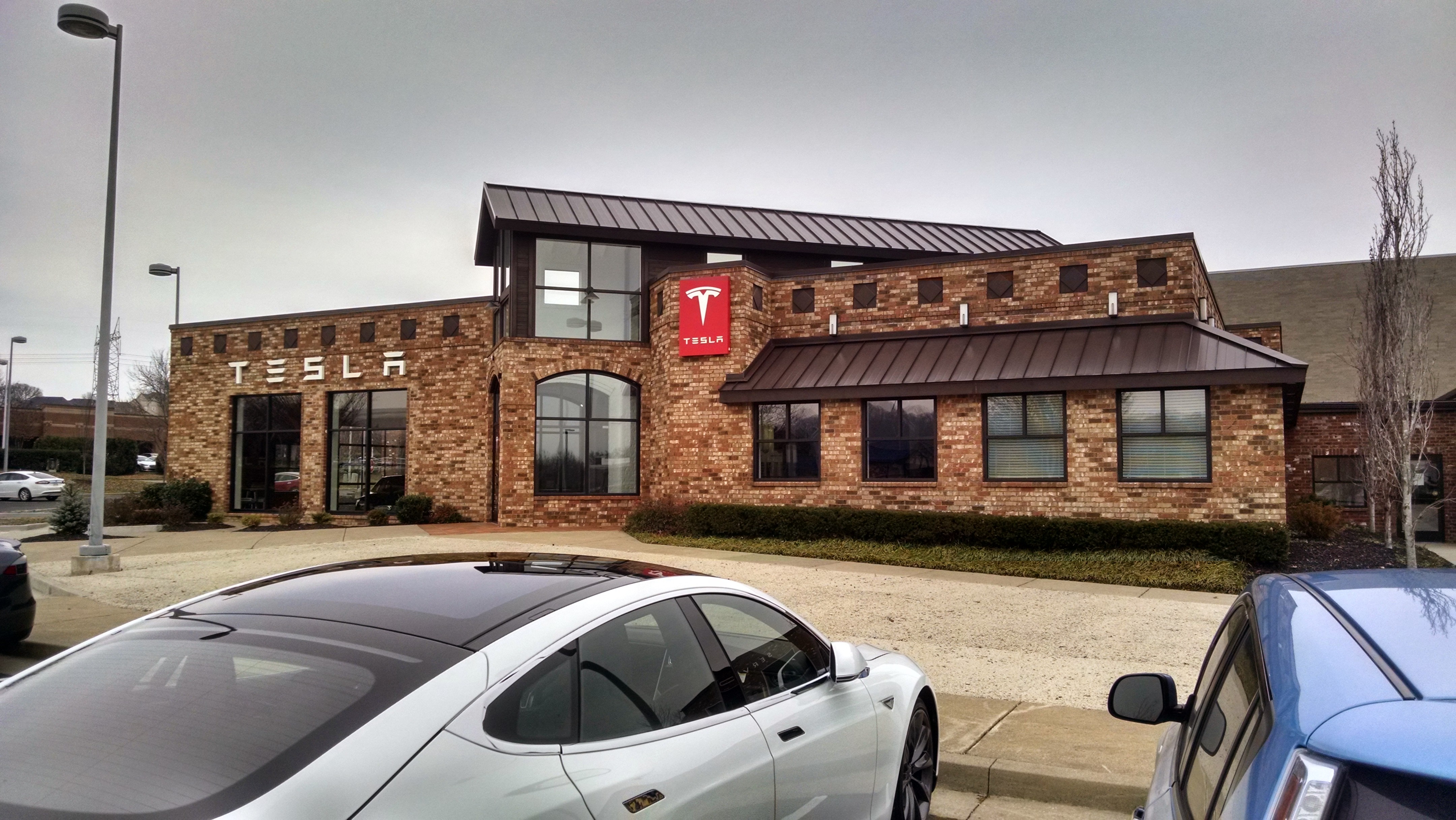
Tesla Showroom, Nashville TN

Tesla Showroom, Nashville TN I was surprised my LEAF sat a little taller. Click to Enlarge

Tesla opened their Nashville Showroom on December 19th 2014 less than 3 miles from Nissan’s North America Headquarters.

I went by the showroom to say ‘hi’ and welcome Tesla to Nashville. I got a rather odd ‘Pfffft’ from a staff member when he greeted me and my LEAF along with a comment that I’d brought a LEAF onto their turf. Once inside I was able to sit in a P85  Model S and the staff were attentive without being pushy. Tesla had an employee from Atlanta come to Nashville to help with the test drives, he drove up in a Model S and supercharged at Chattanooga for 40 minutes to complete his journey. I asked about when a Nashville Supercharger would come, but he simply stated the standard company line that by the end of 2015 90% of all households in the US will be within reach of a Supercharger. He wasn’t giving away any information regarding Nashville.

I noticed the Model S headroom is less than in a LEAF. Looking at the showroom photo above my LEAF stands a little taller than the Model S next to it. I wasn’t expecting that from a much bigger vehicle. The Model S is clearly longer and wider than a LEAF and I found the front seats to be very comfortable compared to my LEAF. Getting into the rear seats is a bit of a squeeze. There is better headroom compared to a LEAF in the rear but my knees were touching the seat in front as would be the case in my LEAF. I’d be happy enough travelling long distance in the Model S’s front seats, not so much in the rear.

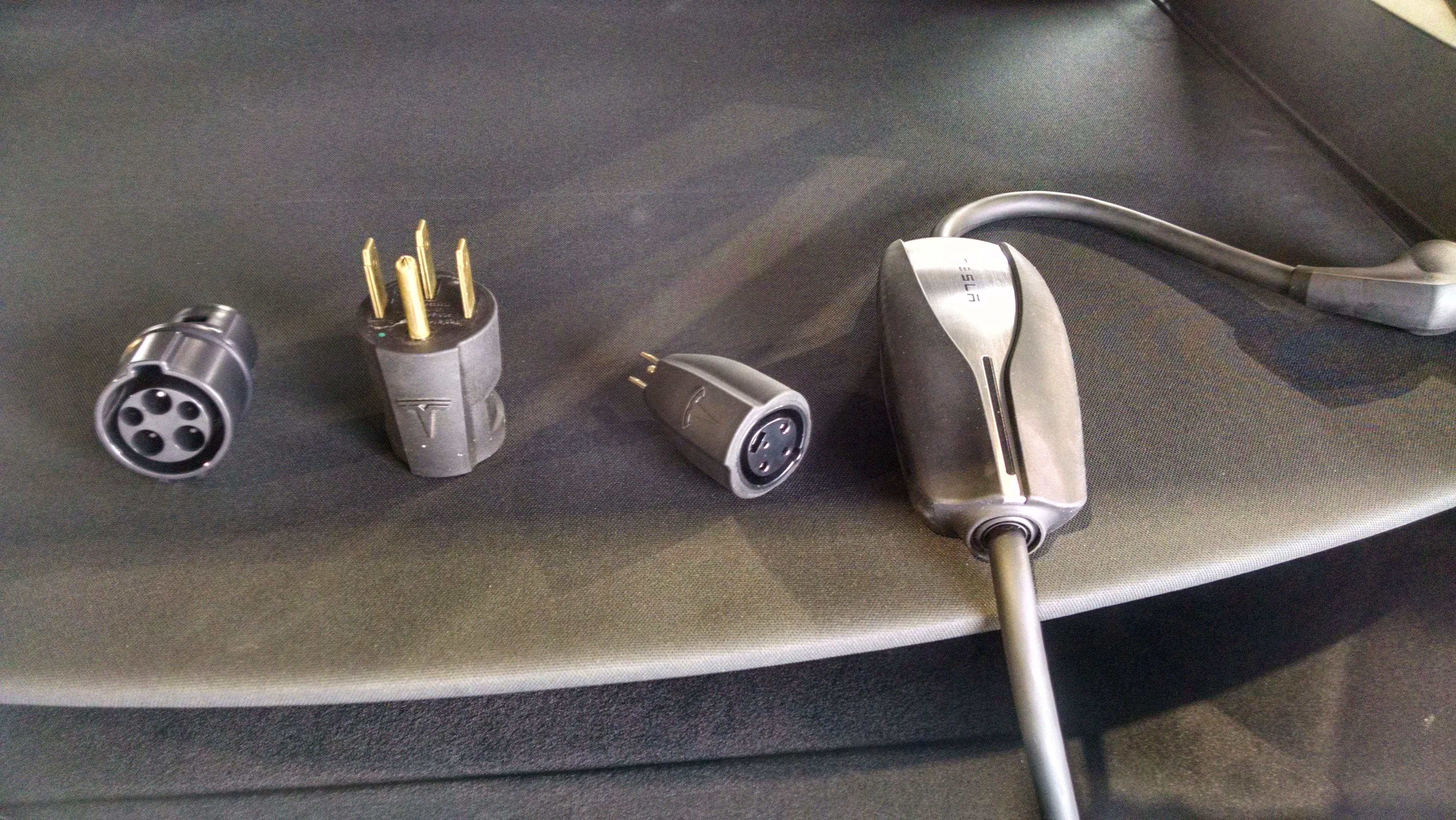
Model S portable EVSE and adapters

Model S portable EVSE and adapters Click image to enlarge.

I spent sometime examining the portable EVSE and adapters that come with the Model S. The car on display had three adapters included, an adapter for standard 240v charging stations (J1772), an adapter for 120v outlets and an adapter for 50Amp/240v campsite outlets.  I wish Nissan would provide a portable EVSE with adapters as well. I had mine converted for $300 and now have adapters, but the Tesla adapters are very compact and light.

Model S  Console showing nav and music. Clcik to Enlarge

Model S Console showing nav and music. Click to Enlarge

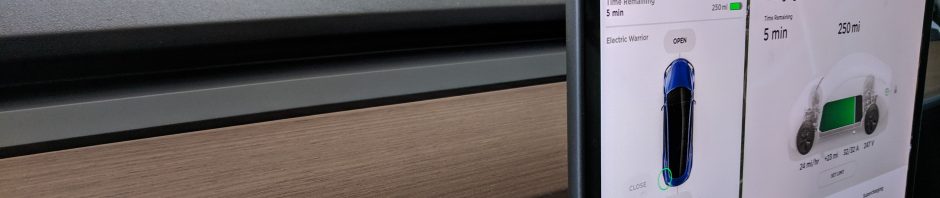
The big feature of the Model S is its large 17″ touchscreen console. I was pleased to see an option to turn ‘creep’ off when the car is on and in gear. A feature that bugs me in the LEAF, I wish Nissan would give drivers this level of customization regarding the car behavior.

I was impressed that many of the settings on the touchscreen are also available on the dash instrumentation with controls on the steering wheel. The two worked very well together, whereas on the LEAF its clear the two were designed as separate instruments with minimal integration. The Model S integration is extensive and seamless.

I was especially impressed that during navigation a diagram of the next intersection is represented on the dash instruments as well as a center console meaning you only have to look down and not to the center of the car to follow the cars directions. This will be much less of a distraction than looking over to the center of the car. Partly due to this I mount my cell phone on the windscreen of my LEAF so I can easily glance at directions and rarely use the LEAF navigation except to locate charging stations. The other reason I use my cell phone is that Waze is a much better navigation tool than the LEAF navigation.

Tesla have mounted 120v outlets at the foot of the light poles in their parking lot, allowing for easy overnight trickle charging of multiple vehicles at this location. I wish more light poles came with this capability, especially at workplaces.

Posted in Electric Car, Level 2 EV Charger, Nissan LEAF, Review, SuperCharger, Tesla Model S, Test Drive | Tagged , , , , , , | Leave a comment

Evolution of Electric and Hydrogen vehicles – what is the future?

Toyota have announced a Hydrogen Fuel Cell Vehicle and claim this is the future of motoring. The name of the car, Mirai,  means future in Japanese. Is this really the future? To be able to answer that question first we must examine recent evolution of car technology.

First Hybrids

In 1997 Toyota introduced the Prius hybrid vehicle in Japan only.

During the 2000’s we saw the rise of the hybrid vehicle and Toyota quickly established the Prius as the market leader when it launched the vehicle worldwide in 2000. Initially ridiculed Toyota soon created a new vehicle segment and other makers followed suit with their hybrids.

First Plug-In Hybrids

In 2005 Prius enthusiasts part of CalCars.org began offering kits to convert a Prius into a plug-in hybrid. (Unimpressed, Toyota did not introduce a plug-in Prius until 2012).

Return of the Battery Electric

In 2008 an unheard of company called Tesla introduced the limited edition Roadster all electric plug-in sports car capable of 245 miles on a single charge.

Production Plug-ins introduced

During the 2010’s the rise of plug-in vehicles began, both battery electric and plug-in hybrids was heralded by the introduction of  the Chevrolet Volt and Nissan LEAF in December 2010. Tesla followed with the Model S in 2012 and many plug-in cars have since come to market.

Production Fuel Cell Car Announced.

Almost 20 years after introducing the Prius, Toyota will launch their first Hydrogen Fuel Cell EV in 2015 in Japan. The Mirai is essentially a Prius with a Hydrogen Fuel Cell instead of a gasoline engine.

So what does this mean for the future?

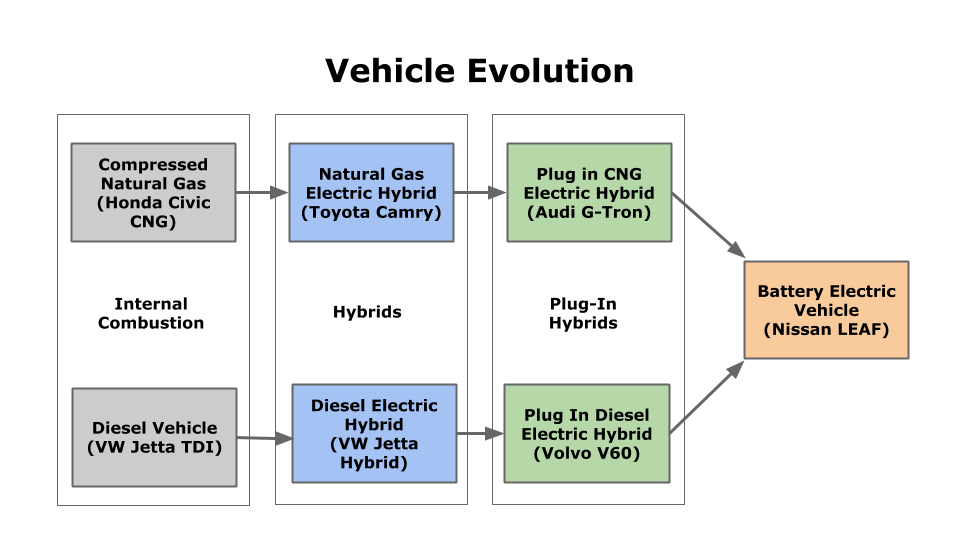
As I look back on recent vehicle evolution I see that we have quickly progressed from Internal Combustion cars to Hybrids to Plug-in Hybrids and finally to Battery Electrics.

Gasoline and Hydrogen Car Evolution

Gasoline and Hydrogen Car Evolution

In the pursuit of more efficient cars the Prius introduced a modest traction battery and motor to increase fuel efficiency to 50 MPG. To achieve greater fuel economy, adding a larger traction battery together with the ability to recharge via a plug allows drivers to exceed 100 mpg with cars like the Chevy Volt.

The final step in the evolution is to increase the size of the traction battery again and eliminate the gasoline engine altogether as Elon Musk did with the Roadster and then the Model S.

The Evolution of Hydrogen

The Toyota Mirai is a hybrid vehicle that runs on Hydrogen gas instead of gasoline. It is the first step in the Hydrogen car evolution as indicated in the diagram above.

Audi have built a concept plug-in Hydrogen fuel cell car, the A7 H-Tron. As with plug-in gasoline cars the plug-in hydrogen car will go considerably further on one kilogram of hydrogen since it can run on electricity for 30 miles before using any Hydrogen. The next logical step in the evolution is to increase the traction battery size again and eliminate the fuel cell altogether.

How about Diesel and Compressed Natural Gas cars?

The evolution is essentially the same.
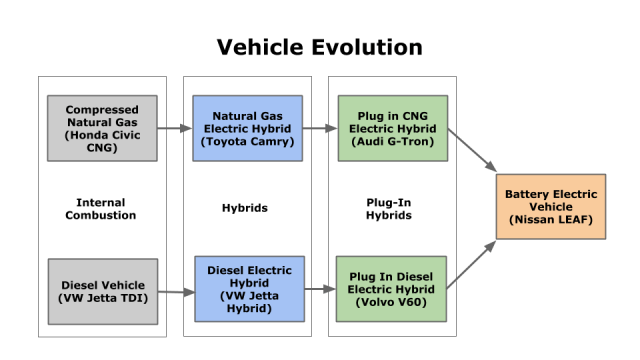
Diesel and Compressed Natural Gas car evolution.

Diesel and Compressed Natural Gas car evolution.

Honda sells the Honda Civic GX, Compressed Natural Gas Car. It has been available since 1998 but sells in very small quantities, less than 100 per month in the US. Lack of public refueling infrastructure holds it back.

Notice that Toyota have announced a hybrid CNG concept vehicle as a special version of the Camry. Toyota certainly have an affinity for hybrid cars that run on a variety of fuels.

Audi have a concept plug-in natural gas car the A3 G-Tron that has a 30 mile electric range before using the engine. The next logical step is to increase the traction battery size again and eliminate the engine.

As with Gasoline cars, Diesel cars are available in many forms. Diesel only like the Jetta TDI. VW also make a hybrid diesel the Jetta Hybrid. Several years ago Volvo started selling the plug-in diesel V60 in Europe which can run on electric for 31 miles before using any diesel which increases its efficiency to 130 MPG. Next step? You guessed it, battery electric.

In Summary

Toyota are the world leaders at making hybrid vehicles. They make the Prius gasoline hybrid, the Camry Natural Gas Hybrid and now the Mirai Hydrogen Fuel Cell Hybrid. They live and breath hybrid vehicles. Producing the Mirai, is the next logical step to leverage their expertise in their mature hybrid technology. It doesn’t matter which fuel is dominant, Toyota have a hybrid vehicle to fit the need. As the world leader in hybrid technology Toyota are well positioned to leverage that advantage as much as possible. Hybrids are well established and profitable, Toyota sees hybrids taking over from conventional cars first and are banking on it.

Time will tell if they are reading the tea leaves correctly. It is also possible we will simply fast forward to plug-in cars, either plug-in hybrids or pure EV’s and skip over hybrids before the hybrid market has had chance to mature.

My Prediction

The hybrid gamble Toyota are taking has major risks. Gasoline hybrid’s leverage an existing vehicle platform and existing fuel infrastructure. Hybrids make something that already exists better. Building a brand new infrastructure for Natural Gas or Hydrogen doesn’t make sense when all along you plan to combine the new fuel with electric drive technology to make a hybrid.

The electric infrastructure is well established and it is comparatively cheap to add EV charging stations to the existing infrastructure at home, work, gas station or at the mall.

All roads lead to battery electrics. That’s the end game.
Posted in Electric Car, Opinion, SuperCharger, Tesla Model S | Tagged , , , , , , , , | 2 Comments

NRG eVgo Fast Charger at Brentwood MAPCO now requires an RFID card

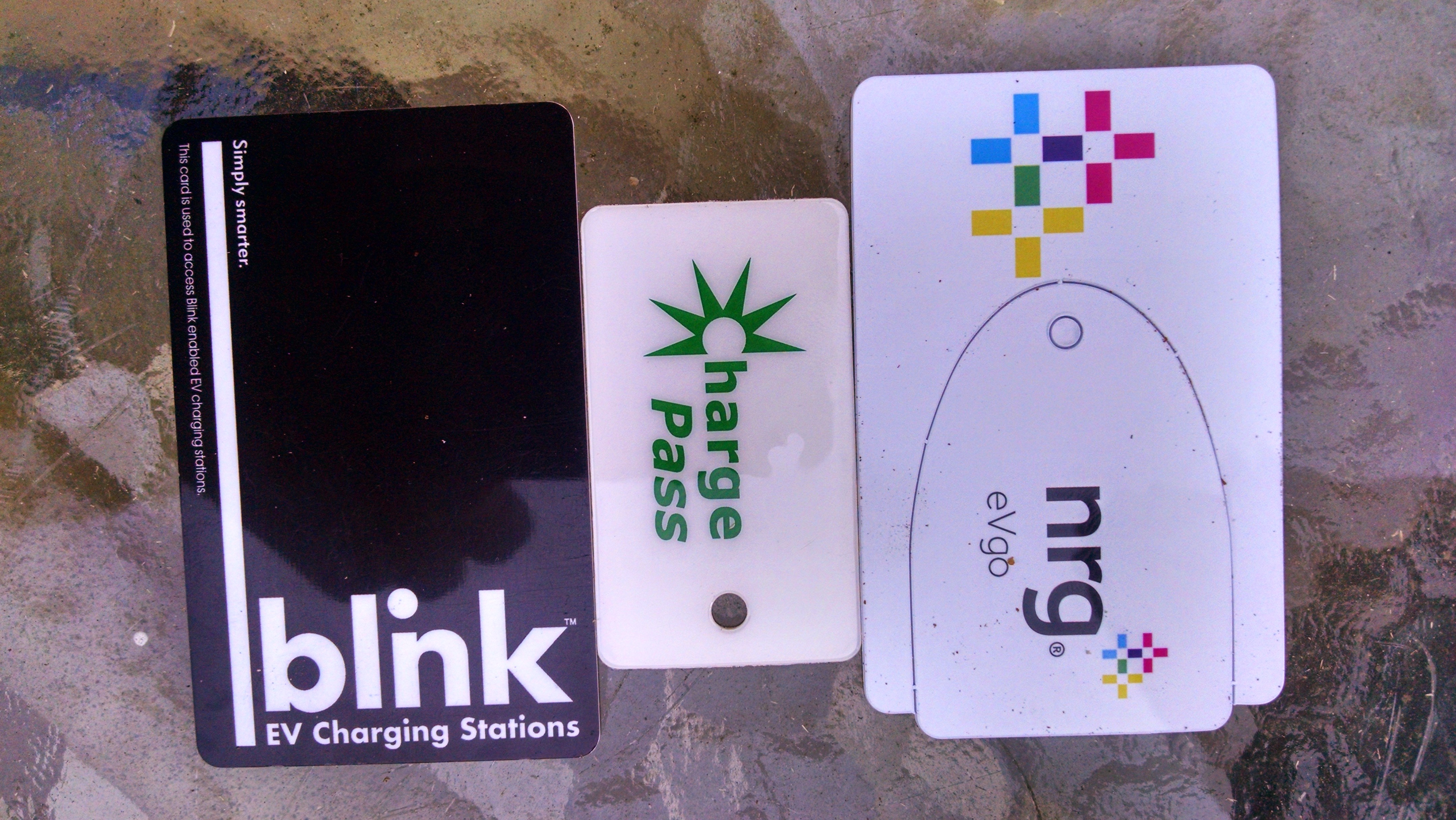
RFID Charge Card Trio

RFID Charge Card Trio

As of this morning (11/19/2014) I was prompted to tap my eVgo RFID card to start a charge at the Brentwood MAPCO station at Moores Lane. The firmware has been updated and this DC Fast Charger unit now charges for up to 30 minutes per session instead of stopping at 80%, that at least is a welcome change.

There was no indication if a fee was levied or not or how much.  NRG/eVgo’s website is not very informative. I have an account with them, but I could find no way to login and examine transactions against my account. I have sent an enquiry to customer service asking how I can check the balance of my account. No charges have hit my credit card yet so there is no evidence of direct billing. It’s quite possible that the unit now requires an RFID card but billing has yet to be established, it really isn’t clear. I look forward to a response from their customer service.

I also noticed while I was on the eVgo website that their “Network Access” plan which gave unlimited DC Fast charging for $49.95 per month is no longer available. I will probably subscribe to their “On the Go” plan which will give me discounted access to the DC Fast chargers for $14.95 per month plus usage charges.

Update 2014-11-24: It took a few days to get a response from eVgo customer service, not very quick at all and the feedback was disappointing. There is no way to check your balance online or any charges accrued. They simply email you a statement each month, which I expect I’ll need to pay. Here is the note I got from eVgo.

Hello Mr. White,

At this time we do not have an Online Account Management system to view energy used during charging sessions. You will receive an email every month with a summary that includes DC Charging, L2 Charging and any other fees associated with your account.

Thank you for contacting us,

Your friends at NRG eVgo

Brentwood MAPCO Fast Charge

Brentwood MAPCO Fast Charge Unit

Posted in CHAdeMO, eVgo, Level 3 EV Charger | Tagged , , , , , | Leave a comment

Tesla Model S welcomed at Nissan HQ

Tesla on Nissan home turf - click to enlarge

Tesla on Nissan home turf – click to enlarge

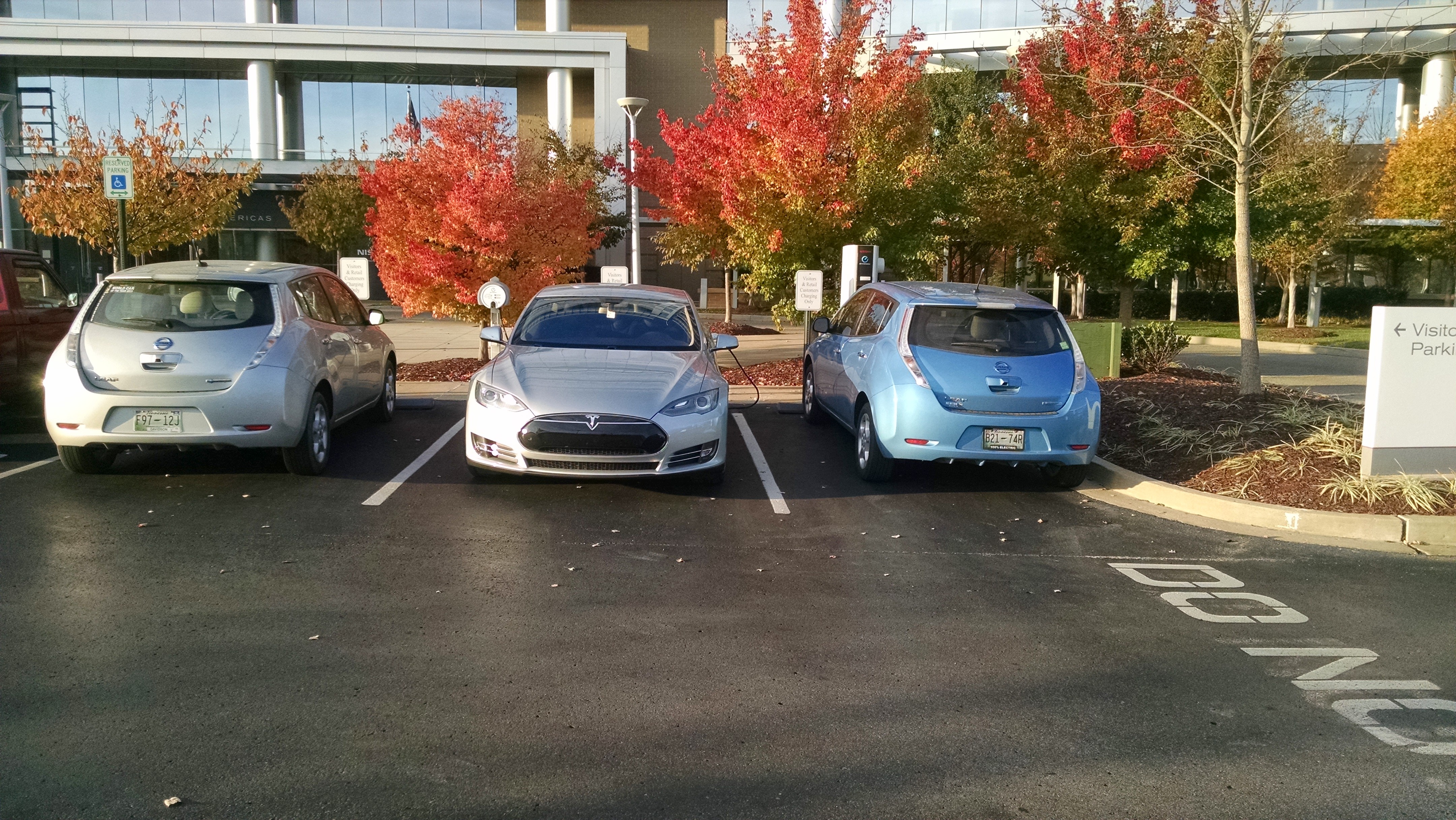
A Tesla driver from Georgia was visiting Nissan HQ in Franklin TN this morning and he/she took advantage of the visitor charging stations at the Nissan HQ building.

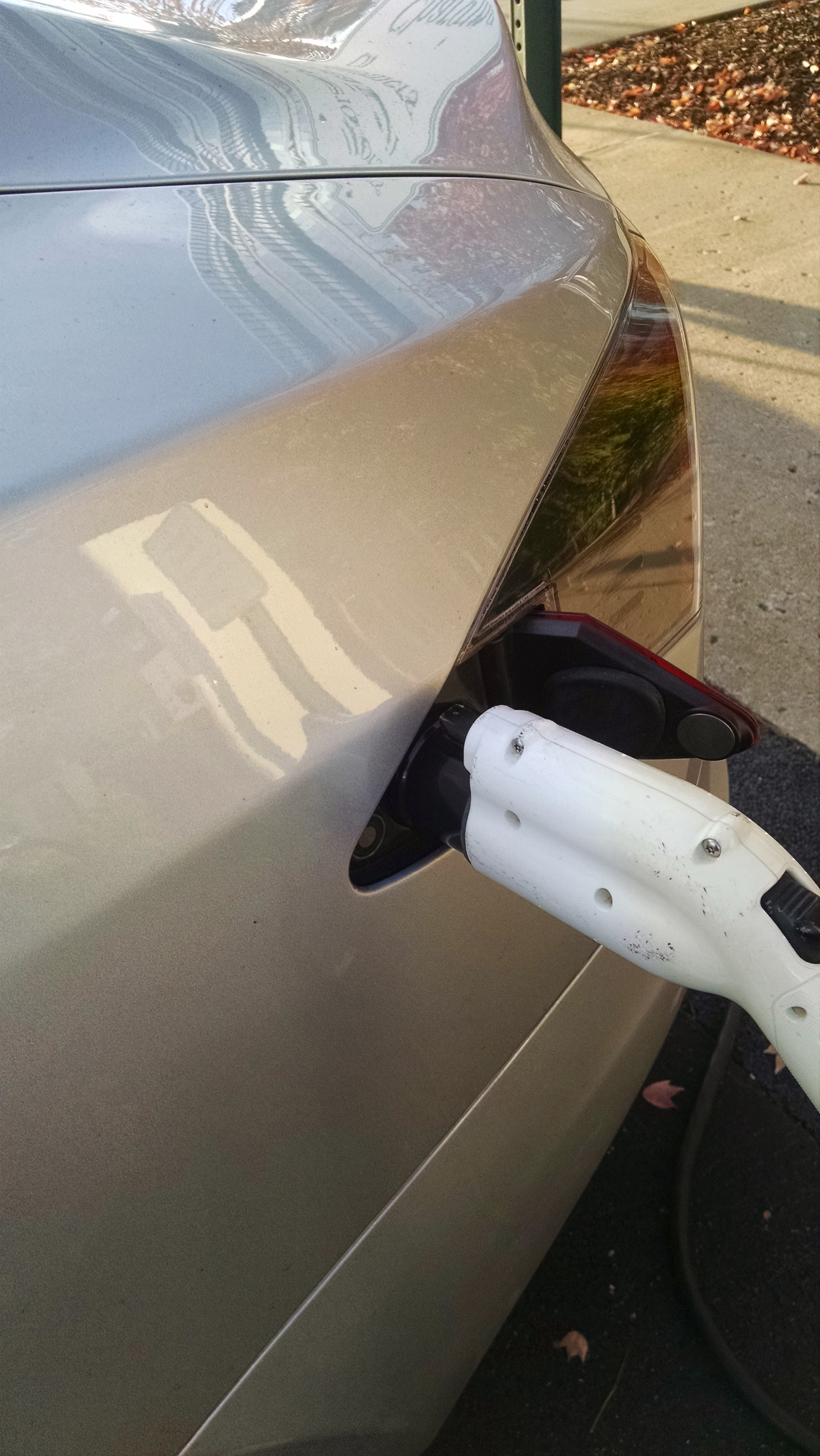
The charge port is in the rear on the Model S, so the driver backed-in to the parking space. The cable has plenty of length, I wonder why the driver didn’t just pull in frontwards? Maybe Tesla drivers have got accustomed to reversing into parking spaces to charge. I have never seen a Model S plugged into a standard EV charging station and wondered if it needed a special adapter, the Tesla Plug is very different from the standard plug. I was surprised to see the standard plug fit the Model S without the need for an adapter. Tesla have designed a neat socket on the vehicle so that it can accept several different plugs without an adapter.

Model S charge port with standard J1772 plug inserted.

Model S charge port with standard J1772 plug inserted.

Nissan and Tesla are both committed global EV suppliers, so I am glad to see a Tesla driver come by to say hi!. Many other car manufacturers are less enthusiastic about EV’s and make just enough EV’s to satisfy regulatory requirements, such as California’s CARB. The only other manufacturer currently showing promise is BMW, and we saw a BMW i3 at Nissan HQ recently as well.

Update: 2014-11-12

The day after I posted this article the owner left a comment on Plugshare thanking Nissan for the charge and keeping his battery warm overnight. The Tesla is from Atlanta and took advantage of the Supercharger at Chattanooga to make the journey to Nashville and back. No word when Tesla will install a Supercharger in Nashville.

Here is the comment left on Plugshare.

Hitendra 8 days ago

Thank you Nissan North America. I was in Franklin, TN for a family wedding this weekend, and your corp HQ level 2 charger was able to keep our Tessie charged up (and the battery warm overnight during the freezing cold). ATL-Nashville is a breeze (using the Chattanooga SC to top up) now. Best of all, the charging is FREE.
Posted in Electric Car, Level 2 EV Charger, SuperCharger, Tesla Model S | Tagged , , , , , , | 9 Comments

Nissan HQ evaluate BMW i3

BMW i3 parked at Nissan HQ in Franklin TN

BMW i3 parked at Nissan HQ in Franklin TN. Click to Enlarge

Nissan have either purchased or borrowed a BMW i3 for their employees to evaluate the competition. The corporate employee I spoke to who was driving the vehicle described it as “Very Different” and was glad another manufacturer was selling battery electrics nationwide. The driver referred to it as a ‘company vehicle’ which leads me to believe it has been purchased by Nissan so they can check out the competition. This is not just any BMW i3, but it is an “Electronaut” edition which were made for drivers of the BMW EV test vehicle, the BMW Active E. Some BMW Electronauts did not finalize purchase of the i3 after they were required to surrender their Active E’s. This appears to be one of them. One of 700 in the world!!

The Tennessee Manufacturer plates means that Nissan have either purchased this i3 or are test driving one from a local dealer.

The Tennessee Manufacturer plates means that Nissan have either purchased this i3 or are test driving one from a local dealer. Click to Enlarge

Good to see Nissan checking out the competition, hopefully this will embolden their desire to improve the LEAF to ensure it remains competitive and the market leading vehicle.

Interesting that the driver didn’t plug the vehicle in, which isn’t great EV parking etiquette. It was the last open charging spot 😦

Posted in Uncategorized | Tagged , , , , , | 2 Comments

Choosing the right NRG eVgo DC Fast Charging plan in Nashville

NRG eVgo station in Nashville

NRG eVgo station in Nashville

Who are NRG?

There’s a new EV Charging company coming to Nashville, NRG eVgo. NRG are a large energy company with a focus on electricity sales and distribution. They have smaller divisions that do Solar Energy and EV charging infrastructure. It’s the only Electric Utility that I know of that tries to promote and grow the EV charging infrastructure.

What are they doing here in Tennessee?

What are they doing in Nashville? They have adopted 7 DC Fast charging stations at Nashville area MAPCO and BP gas stations and are in the process of converting them into their nationwide network and will soon start charging a  fee to use their stations. They offer three standalone charging plans and a charging plan that can be combined with their home charging stations.

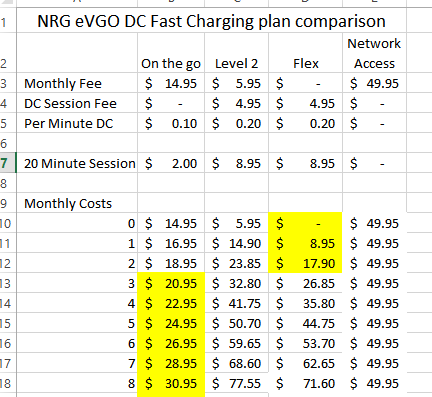
Plan Compared - Click to Enlarge

Plan Compared – Click to Enlarge

Stand alone Charging Plans Compared

Which NRG fast charge plan is the best for your Nissan LEAF, Mitsubishi i-Miev or Kia Soul EV?

FLEX Plan If you rarely use a DC Quick charger it is still advisable to get a charging card from eVgo “Just in case” you find yourself short on charge and short on time one day. Their “FLEX” plan does not attract a monthly fee and is just $4.99 to setup and get an access card.

If you charge 1 or 2 times per month at MAPCO Stations, the best plan is the  “FLEX” plan.

“ON THE GO TOTAL” plan If you anticipate charging 3 or more times per month at MAPCO stations, then it makes sense to subscribe to their “ON THE GO TOTAL” plan. If you find yourself charging twice a month quite often it may be prudent to go with the more expensive “ON THE GO TOTAL” plan since a 3rd charge will cost much more on the FLEX plan, but the second charge is only slightly more expensive than the FLEX plan.

“LEVEL 2” plan eVgo’s “LEVEL 2” plan never makes sense in Nashville. There are no eVgo branded level 2 (240v) units in Nashville that I am aware of, just the DC Fast charge stations at MAPCO stations, so this plan isn’t favorable towards fast charging at all. In Nashville you should not subscribe to this plan regardless of the amount of fast charging you do or don’t do.

Charging Station plus “NETWORK ACCESS” plan

If you anticipate charging 18 or more times at a MAPCO station per month, then it becomes cheaper to rent an eVgo home charging station for $29.95 per month plus a $20 NETWORK ACCESS plan that provides unlimited public charging at no extra cost.

If you plan to rent an eVgo home charging station anyway, then you only have to fast charge charge 2 or more times per month for the NETWORK ACCESS plan to make sense.

Nissan “No Charge to Charge Customers”.

If you have purchased a new Nissan LEAF since May 2014 you are eligible for a Nissan plan and access card that provides 2 years of free public charging. NRG eVgo are participating in the Nissan No Charge to Charge program so it does not make sense to get an eVgo charging plan until the Nissan program runs out for your vehicle.

When is the right time to sign-up?

Sign up for the FLEX plan now. There is no official word when eVgo will start charging for the use of their stations. Currently they are free to use. Several of the MAPCO units have the NRG eVgo livery on them together with the addition of an access card scanner. I will sign-up for their “FLEX” Plan now in order to have a card and retain access to the units. There is no monthly fee or cancellation fee with the FLEX plan, so I can convert it to another plan later if I feel its to my advantage to do so. A one time setup fee of $4.95 is a no brainer in order to retain access in an emergency. My advice is sign-up for the FLEX plan now.

A few units also have customized software with the NRG eVgo logo and instructions how to use. The unit at Wedgewood Avenue is setup to limit charging to 30 minutes, the unit in Brentwood/Cool Springs is setup to limit charging to an 80% charge. NRG maybe experimenting with the best approach to limiting DC Fast Charging sessions in Tennessee.

Free Spreadsheet available showing analysis

The analysis I did is in an Excel spreadsheet. Feel free to download the spreadsheet here.

Membership Card takes 10 days to arrive in mail

The eVgo card and account setup takes about 10 days from ordering to delivery in the mail.  I ordered my card on the 16th September and received it on the 25th.

Don’t wait until NRG activate their card readers in Tennessee to order your card, you maybe stuck with a low charge and no easy way to get a rapid charge.

RFID Charge Card Trio

RFID Charge Card Trio

Posted in CHAdeMO, Electric Car, eVgo, KIA Soul EV, Level 2 EV Charger, Level 3 EV Charger, Mapco, Mitsubishi i-Miev, Nissan LEAF | Tagged , | Leave a comment